




-
 OfertaProveedor:ASA
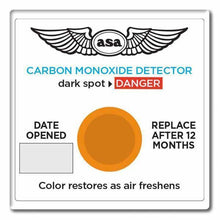
Detector de monóxido de carbono de aviación ASA con alerta visual
Precio habitual $4.45Precio de oferta $4.45 Precio habitualPrecio unitario por$4.95 -
 Proveedor:Sensorcom
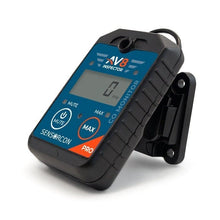
Sensorcon AV8 Inspector Pro: Monitor portátil de monóxido de carbono para aviación
Precio habitual $194.00Precio de oferta $194.00 Precio habitualPrecio unitario por -

Recién salido del hangar
Lo último de las mejores marcas de aviación. -
 Proveedor:Sensorcom
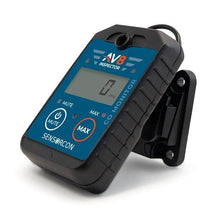
Sensorcon AV8 Inspector: Monitor portátil de monóxido de carbono para aviación
Precio habitual $164.00Precio de oferta $164.00 Precio habitualPrecio unitario por
Aircraft carbon monoxide detectors: early warning for every cockpit
Carbon monoxide poisoning is a documented cause of general aviation accidents, and the gas is colorless, odorless, and tasteless, so a pilot cannot sense it until the symptoms have already begun. In piston aircraft the cabin heater draws warm air across the engine exhaust, and a single cracked weld or worn gasket in that exhaust shroud can route CO directly into the cabin. A purpose-built aircraft CO detector is your first line of defense, alerting you at the low concentrations that matter so you can cut the heat, open fresh-air vents, and get on the ground. Pilot Mall carries three field-proven options that span every budget and every level of protection, all reviewed by pilots and tested in real cockpits.
Compare CO detectors at a glance
| Detector | Type | Alert | Best for |
|---|---|---|---|
| ASA Aviation Carbon Monoxide Detector | Passive chemical spot card | Visual color change | Low-cost backup and renters who want simple coverage |
| Sensorcon AV8 Inspector | Active electronic monitor | Visual and audible, live PPM readout | Owner-flown pilots who want fast, numeric detection |
| Sensorcon AV8 Inspector Pro | Active electronic monitor | Visual, audible, and vibration alarm | Pilots in louder cabins who need a triple alert |
Types of aircraft CO detectors
Passive chemical spot cards
A spot card carries a chemical dot that darkens when carbon monoxide is present. It needs no batteries, costs the least, and mounts in seconds on the panel or glareshield. The trade-off is that you have to look at it to read it, and the dot gives a general indication rather than a precise concentration, so many pilots use a card as an affordable backup to an electronic monitor.
Active electronic monitors
Active monitors use an electrochemical sensor to measure CO continuously and refresh the reading every few seconds. They show a live PPM number and sound an audible alarm, often with staged warning levels, so you get an unambiguous alert even when your eyes are outside the cockpit. They run on batteries and are the choice most owner-flown pilots make for primary protection.
Brands we carry
Pilot Mall stocks Sensorcon, maker of the rugged AV8 Inspector and AV8 Inspector Pro electronic monitors trusted across general aviation, and ASA, whose passive Aviation Carbon Monoxide Detector spot card is a long-standing low-cost staple in the flight bag.
How to choose the right CO detector
Start with how you fly. If you rent or want an inexpensive backup, the passive ASA spot card covers the basics with no batteries to manage. If you own your aircraft or simply want a definite, hard-to-ignore warning, step up to an active electronic monitor: the Sensorcon AV8 Inspector gives you a live PPM readout and audible alarm, and the Sensorcon AV8 Inspector Pro adds a vibration alert that breaks through engine noise and a busy workload. Either way, look for an aviation-grade unit that alarms at low concentrations rather than the high thresholds used in home alarms. For a deeper head-to-head of these exact units, including panel placement and care, read our guide on the best portable CO detectors for pilots. Click any product for current pricing.
Why buy from Pilot Mall
- Aviation only: we sell pilot gear and nothing else, so our team knows what protects you in the cockpit.
- Pilot-tested picks: the detectors we stock have been flown and reviewed by pilots, not pulled off a generic shelf.
- Trusted for 25-plus years: thousands of pilots rely on Pilot Mall for safety equipment and cockpit gear.
- Free U.S. shipping over $100: build a complete safety kit and qualify with ease.
- Expert guidance: talk to people who fly before you buy.
Frequently Asked Questions
Do planes need carbon monoxide detectors?
Yes, a CO detector is strongly recommended for any piston aircraft with a cabin heater. The heater warms air across the engine exhaust, so a cracked exhaust shroud can send carbon monoxide into the cabin. A detector gives early warning of a leak you cannot see, smell, or taste before it impairs you.
Are carbon monoxide detectors required in aircraft by the FAA?
The FAA does not currently mandate a CO detector in most general aviation aircraft, though the NTSB has recommended requiring active CO detectors after investigating fatal poisoning accidents. Because it is inexpensive, lifesaving protection, nearly all safety-minded pilots carry one regardless of the rule.
Where should you mount a CO detector in an airplane?
Mount the detector on the panel or glareshield, in your normal field of view, with the sensor inlet unobstructed. Keep it away from fresh-air vents that could dilute a reading and out of direct sunlight or heat. For a card type, choose a spot you scan regularly during your instrument flow.
What PPM should an aviation CO detector alarm at?
Aviation detectors are built to alert at low concentrations, often warning in the range of roughly 10 to 35 PPM with staged escalating alarms above that. This is far earlier than typical home alarms, which can wait until 70 PPM for an hour before sounding, a delay that is unsafe at altitude.
Can you use a home carbon monoxide detector in an airplane?
It is not recommended. Home CO alarms are designed to delay alerting until CO has been present at high levels for a long period, which is too slow and too high for flight. An aviation detector alarms at lower concentrations and far sooner, giving you time to react while still able to fly.
What should a pilot do when a CO alarm goes off?
Treat it as an emergency. Shut off the cabin heat, open fresh-air vents and any storm window, and consider supplemental oxygen if available. Land as soon as practical and have the exhaust system inspected before flying again. Do not dismiss an alarm as a false reading while symptoms could be building.
