




-
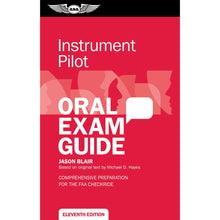 OfertaProveedor:ASA
Guía del examen oral de piloto de instrumentos de la ASA, 11.ª edición
Precio habitual $17.99Precio de oferta $17.99 Precio habitualPrecio unitario por$19.95 -
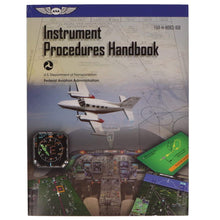 OfertaProveedor:ASA
Manual de procedimientos de instrumentos de la ASA FAA-H-8083-16B
Precio habitual $23.99Precio de oferta $23.99 Precio habitualPrecio unitario por$29.95 -

Recién salido del hangar
Lo último de las mejores marcas de aviación. -
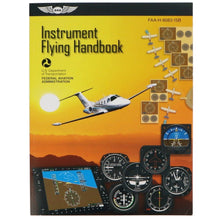 OfertaProveedor:ASA
Manual de vuelo por instrumentos de la ASA (tapa blanda) (FAA-H-8083-15B)
Precio habitual $18.49Precio de oferta $18.49 Precio habitualPrecio unitario por$24.95 -
 OfertaProveedor:Gleim
Escuela terrestre en línea de Gleim para instrumentos
Precio habitual $144.99Precio de oferta $144.99 Precio habitualPrecio unitario por$159.95 -
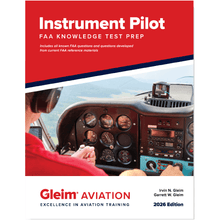 OfertaProveedor:Gleim
Preparación para el examen de conocimientos de piloto de instrumentos de la FAA Gleim 2026
Precio habitual $39.99Precio de oferta $39.99 Precio habitualPrecio unitario por$44.95 -
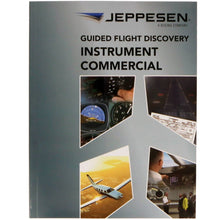 OfertaProveedor:Jeppesen Sanderson
Manual de capacitación para pilotos comerciales de instrumentos de Jeppesen
Precio habitual $89.95Precio de oferta $89.95 Precio habitualPrecio unitario por$97.96 -
 Proveedor:Gleim
Kit de instrumentos Gleim 2026 con preparación de examen en línea
Precio habitual $187.99Precio de oferta $187.99 Precio habitualPrecio unitario por -
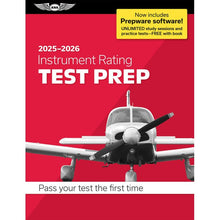 OfertaProveedor:ASA
Paquete de preparación para el examen de habilitación de instrumentos ASA 2025-2026 (libro, descarga, en línea): Domine su examen de la FAA
Precio habitual $43.99Precio de oferta $43.99 Precio habitualPrecio unitario por$44.95 -
 NuevoProveedor:Independent Aviation Consultants
Desafía al Experto: Cuaderno de preparación para el examen oral de habilitación de instrumentos
Precio habitual $26.00Precio de oferta $26.00 Precio habitualPrecio unitario por -
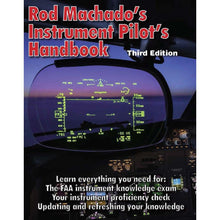 OfertaProveedor:Rod Machado
Manual del piloto instrumental de Rod Machado - 3.ª edición: Domine el vuelo IFR con guía experta
Precio habitual $74.99Precio de oferta $74.99 Precio habitualPrecio unitario por$84.95 -
 OfertaProveedor:Gleim
Guía del examen oral de piloto de instrumentos de Gleim y ACS (tercera edición)
Precio habitual $15.99Precio de oferta $15.99 Precio habitualPrecio unitario por$17.95 -
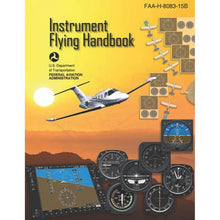 OfertaProveedor:Skyhorse Publishing
Manual de vuelo por instrumentos de la FAA FAA-H-8083-15B Skyhorse Publishing
Precio habitual $18.99Precio de oferta $18.99 Precio habitualPrecio unitario por$19.99 -
 Proveedor:PilotMall.com
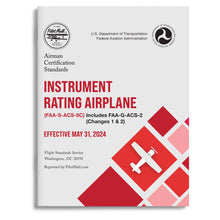
Guía de habilitación de instrumentos para aviones (ACS) de la FAA-S-ACS-8C (con la FAA-G-ACS-2)
Precio habitual $9.95Precio de oferta $9.95 Precio habitualPrecio unitario por -
 OfertaProveedor:Flight Time Publishing
Revisión de vuelo instrumental: Un atajo para revisar las reglas de vuelo instrumental por Art Parma
Precio habitual $9.95Precio de oferta $9.95 Precio habitualPrecio unitario por$11.95 -
 OfertaProveedor:Flight Time Publishing
Manual del Piloto de Instrumentos: Entrenamiento IFR y Maniobras de Vuelo por Art Parma
Precio habitual $16.45Precio de oferta $16.45 Precio habitualPrecio unitario por$17.95


Instrument rating training materials: your complete IFR study library
Earning an instrument rating lets you fly under Instrument Flight Rules and operate legally in the clouds and reduced visibility that ground VFR-only pilots. To get there you have to pass the FAA instrument knowledge (written) test, log specific instrument and cross-country experience with an instructor, and complete an oral and practical checkride with a designated examiner. The materials below cover every one of those steps, from your first ground-school lesson to the night before your checkride. Click any product for current pricing.
Instrument rating study materials at a glance
| Product | Brand | Type | Best for |
|---|---|---|---|
| Gleim Online Ground School for Instrument | Gleim | Online ground school | Self-study students who need a home-study endorsement |
| Gleim 2026 Instrument Kit with Online Test Prep | Gleim | Complete training kit | One-box ground school plus written prep |
| ASA Instrument Rating Test Prep Bundle | ASA | Written test prep (book + software) | Drilling the current FAA knowledge-test question bank |
| Gleim 2026 Instrument Pilot Knowledge Test Prep | Gleim | Written test prep | Question-bank study with detailed answer explanations |
| ASA Instrument Flying Handbook (FAA-H-8083-15B) | ASA | FAA reference handbook | IFR fundamentals, aerodynamics, and systems |
| ASA Instrument Procedures Handbook (FAA-H-8083-16B) | ASA | FAA reference handbook | Real-world IFR operations and approaches |
| ASA Instrument Pilot Oral Exam Guide | ASA | Oral exam prep | Anticipating examiner questions before the checkride |
| Gleim Instrument Pilot Oral Exam Guide & ACS | Gleim | Oral exam prep | Oral prep mapped to the ACS standards |
| Stump the Chump Instrument Rating Oral Exam Prep Workbook | Independent Aviation Consultants | Oral exam workbook | Active recall practice for the oral |
| FAA-S-ACS-8C Instrument Rating Airplane ACS Guide | PilotMall.com | Certification standards | Knowing exactly what you are graded on |
| Rod Machado's Instrument Pilot's Handbook (3rd Edition) | Rod Machado | Full-course manual | Students who learn best from a conversational style |
| Jeppesen Instrument/Commercial Pilot Training Manual | Jeppesen | Full-course manual | Structured, illustrated instrument and commercial study |
Types of instrument rating training materials
Ground school and complete training kits
Ground school teaches the knowledge behind the rating and provides the instructor endorsement required to take the written test. The Gleim Online Ground School for Instrument is a self-paced home-study course, while the Gleim 2026 Instrument Kit with Online Test Prep bundles ground school and written prep so you have everything in one place.
IFR written and knowledge test prep
Knowledge-test prep tools rehearse the current FAA question bank with explanations so the actual exam holds no surprises. The ASA Instrument Rating Test Prep Bundle pairs a study book with download and online practice, and the Gleim Instrument Pilot Knowledge Test Prep walks through every question category in detail.
FAA reference handbooks
The FAA publishes the source texts every instrument student should own. The Instrument Flying Handbook (FAA-H-8083-15B) covers IFR fundamentals, aerodynamics, and instrument systems, while the Instrument Procedures Handbook (FAA-H-8083-16B) applies that knowledge to real-world departures, en route navigation, arrivals, and approaches.
Oral exam and checkride prep
Oral exam guides organize the questions a designated examiner is likely to ask. The ASA Instrument Pilot Oral Exam Guide and the Gleim Instrument Pilot Oral Exam Guide & ACS are checkride staples, and the Stump the Chump workbook turns review into active recall.
Certification standards and full-course manuals
The FAA-S-ACS-8C Instrument Rating Airplane ACS Guide spells out exactly what you will be graded on. For start-to-finish instruction, Rod Machado's Instrument Pilot's Handbook teaches the rating in plain English, and the Jeppesen Instrument/Commercial Pilot Training Manual offers a structured, heavily illustrated path.
Brands we carry
- ASA: Test Prep bundles, Oral Exam Guides, and the FAA handbook reprints that anchor most instrument study plans.
- Gleim: online ground school, knowledge-test prep, complete kits, and ACS-aligned oral exam guides.
- Jeppesen: the structured, illustrated Instrument/Commercial Pilot Training Manual used in many syllabi.
- Rod Machado: conversational, plain-English instrument instruction for students who want the why behind the rules.
- Independent Aviation Consultants: the Stump the Chump oral exam prep workbook for active-recall checkride review.
- PilotMall.com: the FAA-S-ACS-8C Instrument Rating Airplane ACS guide so you train to the published standard.
How to choose the right instrument rating study materials
Start with how you plan to learn the knowledge. If you are studying largely on your own, a complete online ground school or all-in-one kit gives you a structured syllabus and the endorsement you need for the written. If you are already enrolled with a flight school, a dedicated written test prep book or software package may be all you need to pass the knowledge test confidently. Either way, own the FAA reference handbooks: keep the Instrument Flying Handbook for the fundamentals and the Instrument Procedures Handbook for how IFR is flown in the real world. As your checkride approaches, add an oral exam guide and the Instrument Rating ACS so you know precisely what the examiner expects. Finally, do not study in a vacuum: pick up view limiting devices and foggles for the flight portion, keep the FAR/AIM handy, and when you finish the rating, look ahead to commercial pilot training materials. Browse the full flight training material library for everything else on your path.
Why buy from Pilot Mall
- Aviation specialists: we sell pilot gear and training materials only, so our team knows the instrument rating path and which book fits which stage.
- Current editions: we stock up-to-date FAA handbooks, ACS guides, and test prep matched to the current question bank.
- Trusted for 25-plus years: thousands of pilots have earned ratings with materials from Pilot Mall.
- Free U.S. shipping over $100: stock up on a full study library and ship it free.
- Expert guidance: talk to people who fly before you buy.
Frequently Asked Questions
What are the requirements to get an instrument rating?
To earn an instrument rating you must already hold at least a private pilot certificate, be able to read, speak, write, and understand English, and hold a valid medical (third class or BasicMed for the flight training). You then pass the FAA instrument knowledge test, log the required instrument experience, and pass an oral and practical checkride.
How many flight hours do you need for an instrument rating?
Under Part 61 you need 40 hours of actual or simulated instrument time, including at least 15 hours of instrument flight training with an authorized instructor and one 250-nautical-mile IFR cross-country that uses three different kinds of approaches. Part 141 approved courses can reduce the requirement to 35 hours.
What is on the instrument rating written test and what score do you need to pass?
The FAA Instrument Rating Airplane knowledge test has 60 multiple-choice questions and a 2.5-hour time limit, and you need 70 percent to pass. It covers regulations, IFR procedures, weather, navigation, aircraft systems, and flight instruments, which is why dedicated test prep matched to the current question bank is so effective.
What is the difference between the Instrument Flying Handbook and the Instrument Procedures Handbook?
The Instrument Flying Handbook (FAA-H-8083-15B) teaches the fundamentals: IFR aerodynamics, flight instruments, attitude instrument flying, and navigation systems. The Instrument Procedures Handbook (FAA-H-8083-16B) builds on that with real-world IFR operations, covering departures, en route, arrivals, and instrument approaches. Most instrument students study both.
What is the best way to study for the IFR written test?
The most effective approach pairs a structured ground school or training manual to learn the concepts with a test prep product that drills the current FAA question bank. Work through the questions until you understand why each answer is correct, not just which one, then review weak areas using the FAA handbooks before scheduling your exam.
What is the ACS for the instrument rating?
The Airman Certification Standards (FAA-S-ACS-8C) for the Instrument Rating Airplane is the FAA document that defines the knowledge, risk management, and skill standards an applicant must meet on the checkride. Studying the ACS tells you exactly what your examiner will test, so you can train directly to the published standard.
