




Shop by Category
We only stock the brands pilots trust in the cockpit.


-
 SaleNewVendor:Garmin
Garmin D2 Mach 2 Pro Aviator Smartwatch - Carbon Gray DLC Titanium with Chestnut Leather Band
Regular price $1,399.99Sale price $1,399.99 Regular priceUnit price per$1,549.99 -
 SaleVendor:Icom
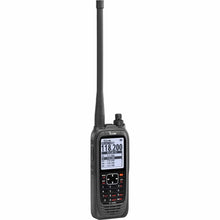
Icom IC-A25C-S Sport Com Only Transceiver: Handheld Aviation Radio
Regular price $369.00Sale price $369.00 Regular priceUnit price per$580.00 -
 Vendor:Dual Electronics Corporation
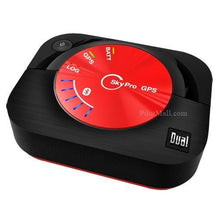
Dual Electronics SkyPro XGPS160: Multi-Device Aviation GPS Receiver
Regular price $169.99Sale price $169.99 Regular priceUnit price per -
 SaleNewVendor:Garmin
Garmin D2 Mach 2 Aviator Smartwatch: Carbon Gray DLC Titanium with Vented Titanium Bracelet (51 mm)
Regular price $1,349.99Sale price $1,349.99 Regular priceUnit price per$1,499.99 -
 SaleVendor:Garmin
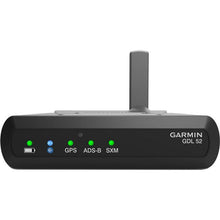
Garmin GDL 52 Portable SiriusXM AHRS ADS-B Receiver: All-in-One Aviation Receiver
Regular price $1,360.00Sale price $1,360.00 Regular priceUnit price per$1,425.00 -
 Vendor:Appareo
Appareo Stratus 4 Portable ADS-B Receiver with Color Touch Screen and Replaceable Battery
Regular price $849.00Sale price $849.00 Regular priceUnit price per -
 NewVendor:Garmin
Garmin D2 Air X15 Aviator Smartwatch - The Smartwatch for Your Full-Throttle Lifestyle
Regular price $649.99Sale price $649.99 Regular priceUnit price per$649.99 -
 SaleVendor:Icom
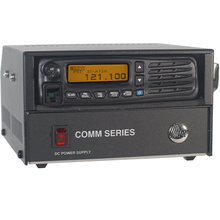
Icom IC-A120B VHF Air Band Transceiver - Base Station
Regular price $1,449.95Sale price $1,449.95 Regular priceUnit price per$2,099.00 -
 SaleNewVendor:Garmin
Garmin D2 Mach 2 Aviator Smartwatch: Titanium with Oxford Brown Leather Band (47 mm)
Regular price $1,199.99Sale price $1,199.99 Regular priceUnit price per$1,349.99 -
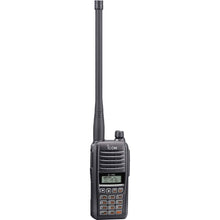 SaleVendor:Icom
Icom IC-A16B Com Only Transceiver: Handheld Aviation Radio with Bluetooth
Regular price $399.95Sale price $399.95 Regular priceUnit price per$658.90 -
 NewVendor:uAvionix
uAvionix AV-20-E Experimental Multi-Function Display UAX-90062
Regular price $895.00Sale price $895.00 Regular priceUnit price per -
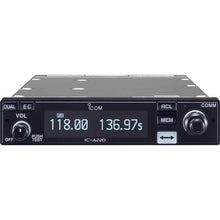 SaleVendor:Icom
Icom IC-A220 VHF Panel Mount VHF Air Band Transceiver with OLED Display
Regular price $1,449.95Sale price $1,449.95 Regular priceUnit price per$2,530.00 -
 NewVendor:Garmin
Garmin D2 Air X15 Aviator Smartwatch: Slate with Black Silicone Band
Regular price $649.99Sale price $649.99 Regular priceUnit price per$649.99 -
 NewVendor:uAvionix
uAvionix AV-30-C Certified 3-Inch Digital Multi-Function Display (MFD)
Regular price $2,499.00Sale price $2,499.00 Regular priceUnit price per -
 NewVendor:uAvionix
uAvionix tailBeaconX TSO ADS-B Out Transponder with WAAS GPS UAX-90059-03
Regular price $2,499.00Sale price $2,499.00 Regular priceUnit price per -
 NewVendor:uAvionix
uAvionix AV-30-E Experimental 3-Inch Digital Multi-Function Display UAX-90051-01
Regular price $1,849.00Sale price $1,849.00 Regular priceUnit price per -
 NewVendor:Garmin
Garmin inReach Mini 3 Plus Compact SOS Satellite Communicator with Photo & Voice Messaging
Regular price $499.00Sale price $499.00 Regular priceUnit price per -
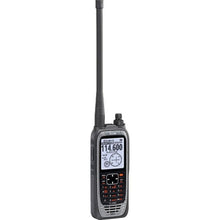 SaleVendor:Icom
Icom IC-A25N Nav/Com Transceiver: Handheld Aviation Radio with Bluetooth
Regular price $599.95Sale price $599.95 Regular priceUnit price per$1,049.40 -
 NewVendor:uAvionix
uAvionix skyBeacon ADS-B Out Wingtip LED Nav Light with WAAS GPS UAX-90032-01
Regular price $2,199.00Sale price $2,199.00 Regular priceUnit price per -
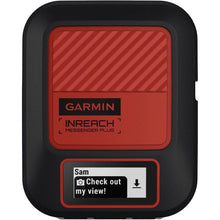 Vendor:Garmin
Garmin inReach Messenger Plus: Satellite Communicator with SOS and Tracking 010-02887-00
Regular price $499.99Sale price $499.99 Regular priceUnit price per -
NewVendor:Garmin
Garmin D2 Air X15 Aviator Smartwatch - Silver with Black Silicone Band
Regular price $649.99Sale price $649.99 Regular priceUnit price per$649.99 -
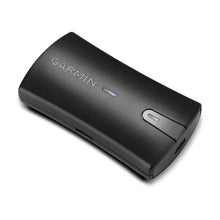 Vendor:Garmin
Garmin GLO 2 Aviation Bundle: Portable Bluetooth GPS & GLONASS Receiver 010-02184-00
Regular price $140.00Sale price $140.00 Regular priceUnit price per -
 NewVendor:uAvionix
uAvionix tailBeacon TSO ADS-B Out Rear LED Position Light with WAAS GPS UAX-90036-01
Regular price $2,199.00Sale price $2,199.00 Regular priceUnit price per -
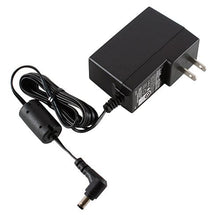 SaleVendor:Icom
Icom BC‑123SA AC Adapter - 100 - 240 VAC US Plug, 12 V DC @ 1 A
Regular price $29.95Sale price $29.95 Regular priceUnit price per$49.95


Handheld aviation radios, portable GPS, and ADS-B receivers for every flight bag
This collection covers the gear that keeps a pilot connected and oriented when the panel is not enough: portable VHF airband radios, portable GPS receivers, ADS-B weather and traffic receivers, and satellite communicators, plus a few panel-mount and base-station transceivers for installed use. A handheld aviation radio earns its place as backup communication for a dead panel COM, clearance copying on the ground, and ramp training, while a portable aviation GPS or ADS-B receiver adds navigation and weather that do not depend on your ship's avionics. Pilot Mall carries the trusted airband brands, including Icom, Yaesu, and Garmin.
Compare popular radios, GPS, and receivers at a glance
| Product | Type | Best for | Key features |
|---|---|---|---|
| Yaesu FTA-250L | COM-only handheld | Simple, rugged backup radio | Two-way airband voice, Li-ion battery |
| Icom IC-A16B | COM-only handheld | Backup radio with wireless audio | Two-way voice, Bluetooth pairing |
| Icom IC-A25N | Nav/com handheld | Adding VOR navigation receive | Nav/com, Bluetooth, GPS support |
| Yaesu FTA-850L | Nav/com handheld | Full-color display and built-in GPS | Nav/com, Bluetooth, GPS |
| Garmin GDL 52 | Portable weather/traffic receiver | Adding weather and traffic to a handheld-radio kit | Wireless feed to your EFB, satellite-weather option |
| Appareo Stratus 4 | Portable weather/traffic receiver | ForeFlight pilots adding free weather to the bag | Feeds an EFB over Wi-Fi, on-board status display |
| Garmin inReach Mini 3 Plus | Satellite communicator | Staying reachable past VHF and cell range | Two-way satellite text, location share, emergency SOS |
| Icom IC-A120B | VHF base station (installed) | FBO, flight school, and ground operations | Fixed airband transceiver, not portable |
Click any product for current pricing.
Types of aviation radios, GPS, and receivers
COM-only handheld radios
A COM-only handheld does one job and does it well: two-way airband voice. It is the most common backup radio because there is less to learn under stress and the controls stay simple. The Yaesu FTA-250L is a compact, rugged choice, and the Bluetooth-equipped Icom IC-A16B adds wireless headset audio. Browse the full lineup in handheld aviation radios.
Nav/com handheld radios
A nav/com handheld adds a navigation receiver to the airband transceiver, so it can pick up VOR radials and, on some models, ILS or localizer guidance. The Icom IC-A25N pairs nav/com with Bluetooth, while the Yaesu FTA-850L combines a full-color display with built-in GPS for moving-map awareness in your hand.
Portable GPS and ADS-B receivers
Portable receivers feed your tablet electronic flight bag. A dedicated GPS sends position to apps like ForeFlight and Garmin Pilot, while an ADS-B receiver such as the Garmin GDL 52 or the Appareo Stratus 4 also brings traffic and free FAA weather to the same screen. The dual-band, subscription-free, and SiriusXM details get their own deep dive on our ADS-B subscription-free weather receivers page. For position-only navigation, browse Garmin aviation GPS and GPS and navigation receivers.
Satellite communicators and base stations
A satellite communicator like the Garmin inReach Mini 3 Plus adds two-way messaging and SOS coverage far beyond VHF range, anywhere on earth. For fixed installations, the Icom IC-A120B is a base-station airband transceiver for an FBO, flight school, or ground crew, rather than a flight-bag handheld.
Top aviation radio and GPS brands
- Icom builds the IC-A series of airband handhelds, including COM-only, Bluetooth, and nav/com models, plus panel-mount and base-station transceivers for installed use.
- Yaesu makes the FTA line of handheld transceivers, from the simple COM-only FTA-250L to nav/com models with full-color displays and built-in GPS.
- Garmin covers portable aviation GPS, ADS-B and SiriusXM weather receivers, and the inReach satellite communicators that extend coverage off the grid.
- Appareo builds the Stratus family of portable ADS-B receivers favored by ForeFlight users, available in our ADS-B weather receivers collection.
How to choose the right handheld aviation radio
- COM-only or nav/com: Choose COM-only for a simple voice backup, or nav/com if you want VOR navigation receive and, on some models, glideslope guidance in your hand.
- Power and range: Aviation handhelds output about 5 to 6 watts. VHF is line-of-sight, so expect roughly 8 to 15 miles on transmit and up to about 30 miles on receive near the ground, with far greater range at altitude.
- Battery strategy: A lithium-ion pack is convenient for daily use, while an AA alkaline tray is the emergency-readiness choice for a radio that lives in the flight bag and may sit for months.
- Bluetooth and headset audio: Bluetooth-equipped models such as the Icom IC-A16B and Icom IC-A25N pair wirelessly, and most radios also accept a wired headset through standard dual GA plugs or an adapter.
- Channel spacing: The US grid uses 25 kHz spacing. If you fly internationally or in Europe, confirm the radio supports 8.33 kHz channel spacing, which is mandated there.
- GPS and weather: If you want navigation or in-flight weather rather than just voice, pair a radio with a portable receiver from Garmin aviation GPS or ADS-B subscription-free weather receivers.
For a model-by-model comparison of current Icom and Yaesu transceivers, see our guide to the best aviation handheld radios.
Why buy from Pilot Mall
- Aviation-only focus: we sell pilot gear and nothing else, so our team knows airband radios, GPS, and ADS-B.
- Trusted for more than 25 years by student, recreational, and professional pilots.
- Genuine product from the brands we carry, with the full manufacturer warranty.
- Free U.S. shipping over $100.
- Expert guidance from a team that flies, available before and after your purchase.
Frequently Asked Questions
Do you need a license to use a handheld aviation radio?
In the United States, the FCC no longer requires an individual station license to use a VHF airband handheld domestically. An FCC Aircraft Radio Station License and a Restricted Radiotelephone Operator Permit are only required when you fly internationally, so most US pilots can operate a backup handheld at home without extra paperwork.
What is the difference between a COM-only and a nav/com handheld radio?
A COM-only handheld does two-way airband voice, which is all most pilots need from a backup radio. A nav/com handheld adds a navigation receiver that picks up VOR radials, and on some models ILS or localizer guidance, giving you basic navigation as well as communication in a single unit.
How far can a handheld aviation radio transmit?
VHF airband is line-of-sight, so range depends mostly on altitude and terrain. Near the ground, expect roughly 8 to 15 miles on transmit and up to about 30 miles on receive. At altitude the horizon opens up and usable range increases dramatically, reaching well over 100 miles in clear conditions.
What battery type is best for a backup handheld, lithium-ion or AA?
It depends on how the radio is used. A lithium-ion rechargeable pack is convenient for a radio you fly with regularly. An AA alkaline tray is the better emergency-readiness choice for a radio that lives in the flight bag, because fresh alkaline cells hold a charge for years and can be swapped in instantly.
What is the difference between a portable GPS, an ADS-B receiver, and a satellite communicator?
A portable GPS feeds position to your tablet EFB. An ADS-B receiver adds free FIS-B weather and traffic in US airspace on top of position. A satellite communicator, such as the Garmin inReach, adds two-way text messaging and SOS coverage off the grid, well beyond the range of VHF radio.
Do portable ADS-B receivers give you free weather?
Yes, in short. A portable ADS-B receiver brings subscription-free FIS-B weather and traffic to your EFB, with SiriusXM available as a paid any-altitude add-on on capable units. The full dual-band, FIS-B, and SiriusXM comparison lives on our ADS-B subscription-free weather receivers page.
Do I need a handheld aviation radio if my aircraft already has a panel-mounted COM?
What is the range of a handheld aviation radio?
AA batteries vs. rechargeable Li-ion — which should I choose?
What is the difference between a COM-only radio and a NAV/COM radio?
What is a portable ADS-B receiver and do I need one?
Can I use a satellite communicator as a backup to my aircraft's radio?
Need Help Deciding?
Use our expert buyer's guides to find the perfect handheld radio with confidence.
-

Best Aviation Handheld Radios 2026 – Ultimate Guide for VHF Airband Transceivers
Our 2026 guide compares the best aviation handheld radios for pilots, from simple COM-only backups to advanced NAV/COM and GPS...14 min readProduct Information -

The Two Types of Reliability Every Pilot Needs
Every pilot needs a reliable handheld radio, but "reliable" can mean two different things. Is it the rock-solid, simple-to-use toughness...5 min readProduct Information -

Why Every Pilot Needs a Portable Aviation Radio
A handheld aviation radio belongs in every pilot's flight bag. This guide covers the real-world scenarios where a portable transceiver...11 min readProduct Information -

Garmin GDL 50 vs GDL 52: Portable ADS-B Receivers Compared
Choosing between Garmin's popular portable ADS-B receivers? Our in-depth comparison breaks down the key differences between the GDL 50 (ADS-B...11 min readADS-B -

GPS & ADS-B Portable Buyers Guide
Is your cockpit taking advantage of ADS-B? Getting real-time traffic information and current weather information used to cost thousands in...4 min readProduct Information -

Aviation Handheld Radios: The Complete Buyer's Guide
Not sure which aviation handheld radio is right for your flying? This guide breaks down every feature that matters, compares...12 min readRadios


